
Peekaboo
Publications
Talks
Teaching
Blog Posts
Peekaboo
github
Hrbust
Bilibili

Flow Control

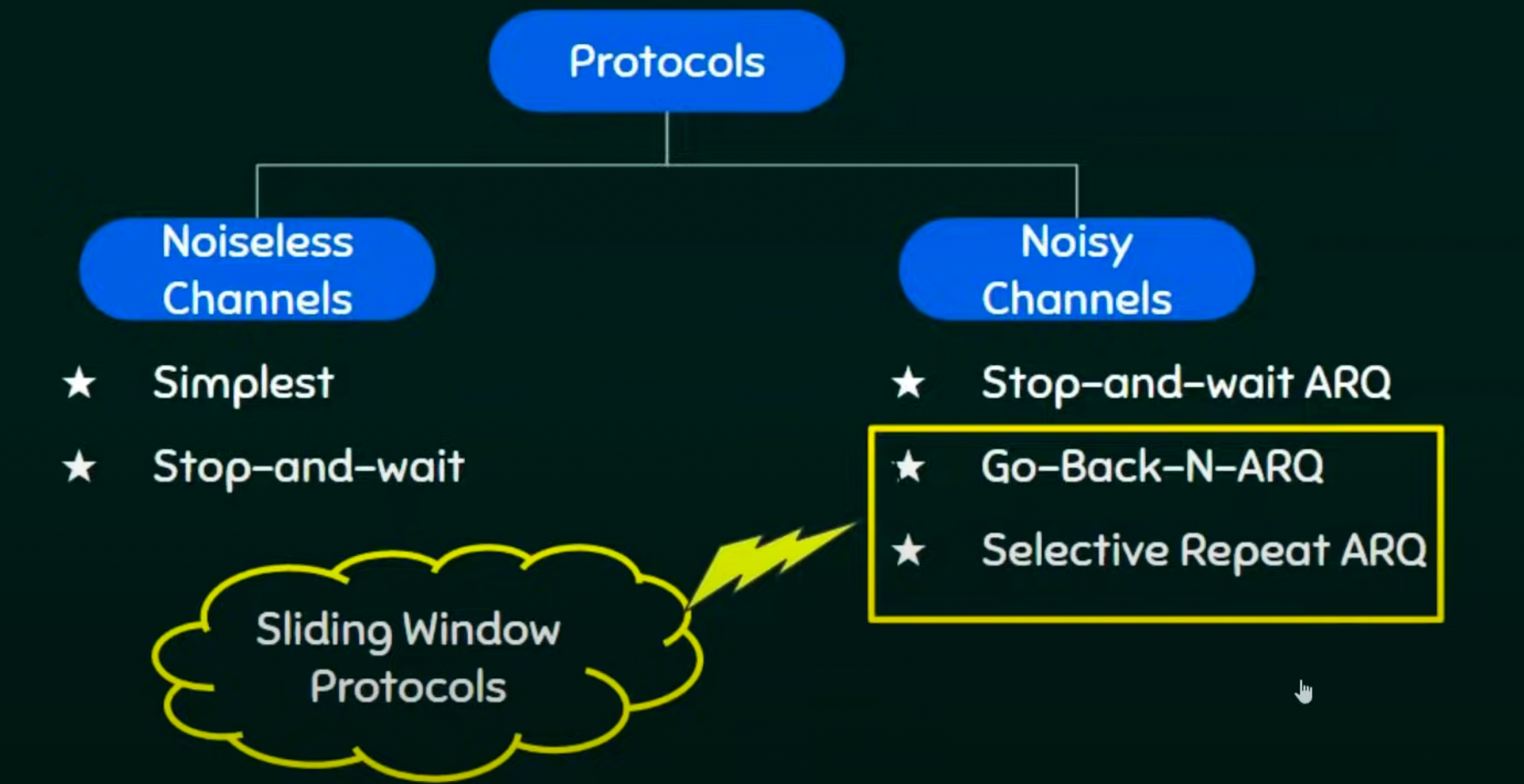
Protocols :

  1. Noiseless Channels

    1. Simplest Protocol

    2. Stop-and-wait Protocol

      1. Stop-and-Wait protocol is data link layer protocol for transmission of frames over noiseless channels.

      2. It provides unidirectional data transmission with flow control facilities but without error control facilities.

        1. Unidirectional data transmission means that either sending or receiving will take place at a time, both sending and receiving will not happen at a time.
      3. The idea of stop-and-wait protocol is straightforward.

      4. After transmitting one frame, the sender waits for an acknowledgement before transmitting the next frame.

      5. Primitive of stop-and-wait protocol

        1. Sender side:

          1. send one data packet at a time
          2. Send the next packet only after receiving ACK for the previous.
        2. Receiver side

          1. Receive and consume data packet.
          2. After consuming packet, ACK need to be sent(Flow Control)
      6. Problems of stop-and -wait protocol

        1. Problems due to last data.
          Sender waits for ACK for an infinite amount of time.
          Receiver waits for data an infinite amount of time.
        2. Problems due to lost ACK.
          Sender waits for an infinite amount of time for ACK.
        3. Problem due to delayed ACK/data
          After timeout on sender side, a delayed ACK might be wrong considered as ACK of some other data packet.
  1. Noisy Channels

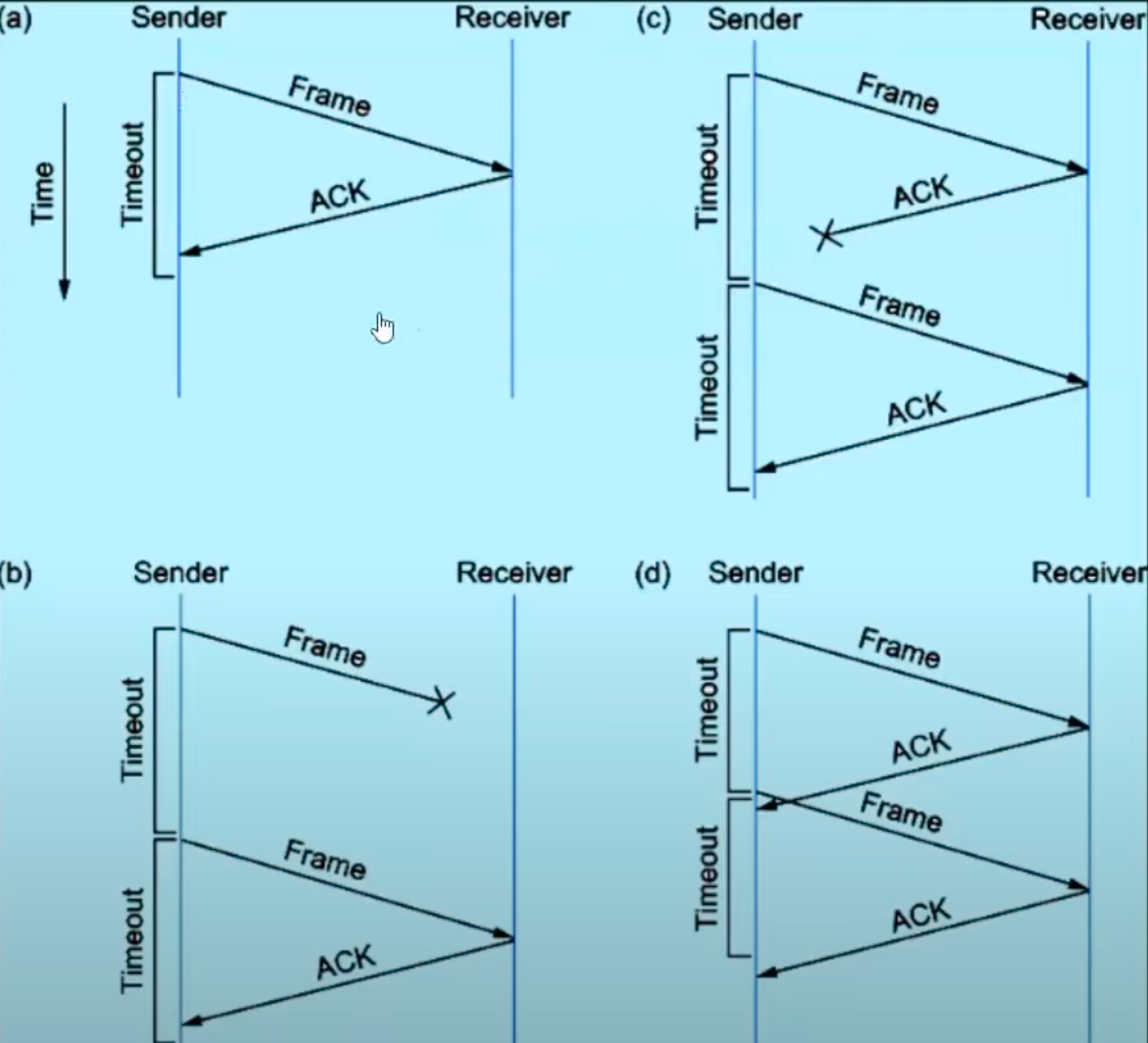
    1. Stop-and-wait ARQ(stands for automatic repeat request) Protocol
      Idea of stop-and-wait protocol is straightforward.
      After transmitting one frame, the sender waits for an acknowledge before transmitting the next frame
      If the acknowledgement does not arrive after a certain period of tome, the sender times out and retransmits the original frame.

    Drawbacks:
    One frame at a time.
    Poor utilization.

    1. Sliding Window Protocol
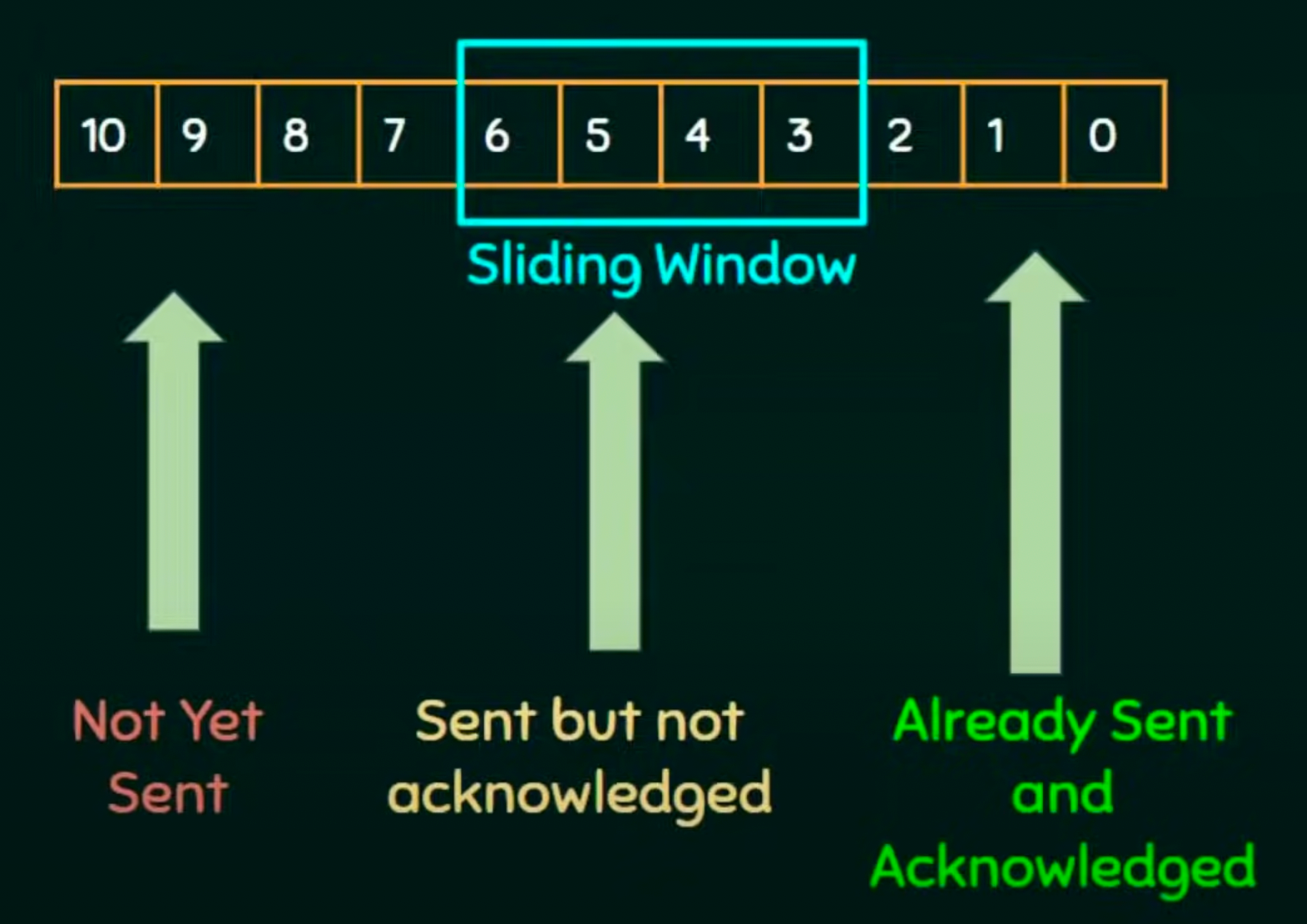
      Send multiple frames at a time.
      Number of frames to be sent is based on Window size
      Each frame is numbered->Sequence number.
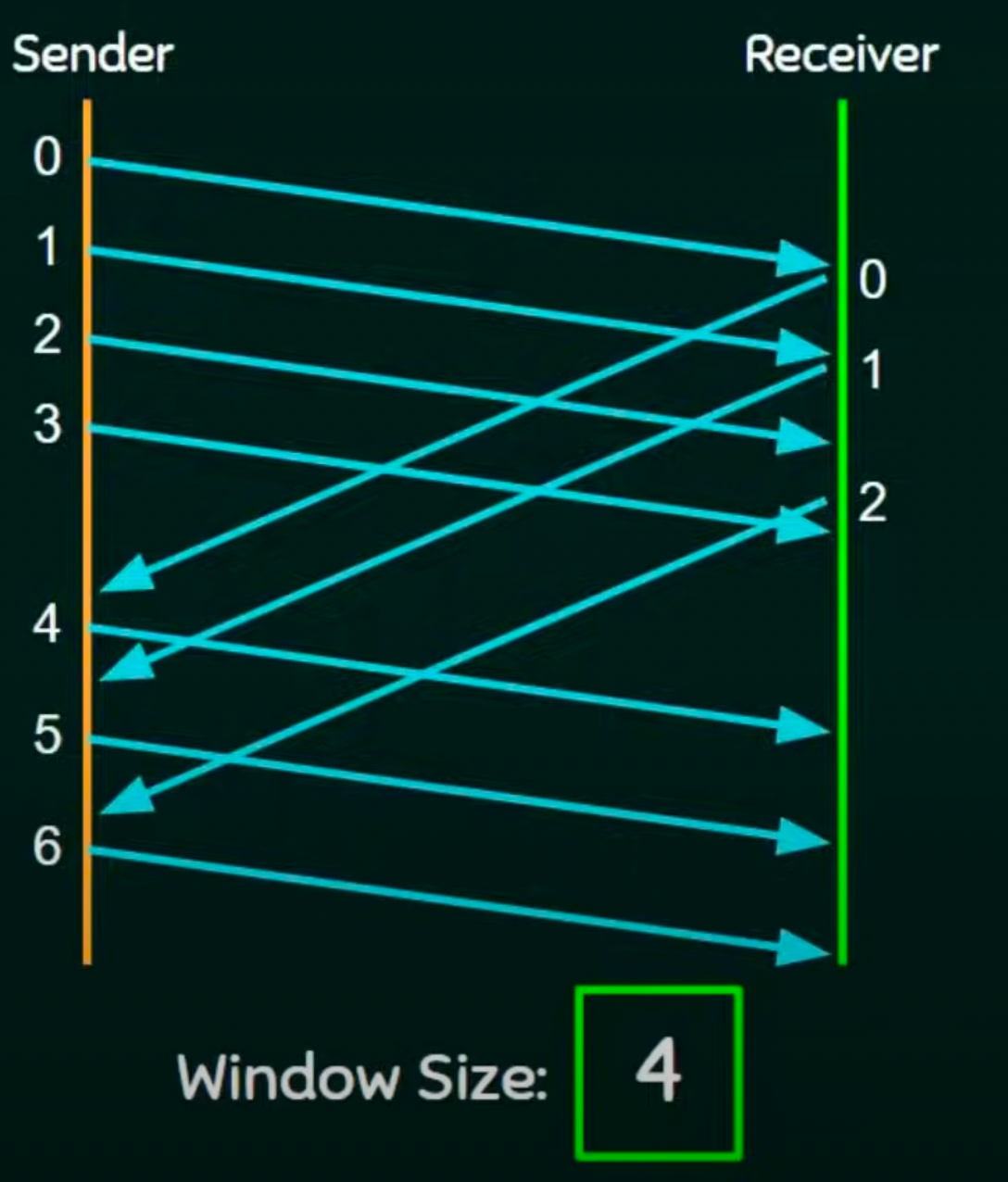
      1. Go-Back-N-ARQ
        'N' is the sender window size.
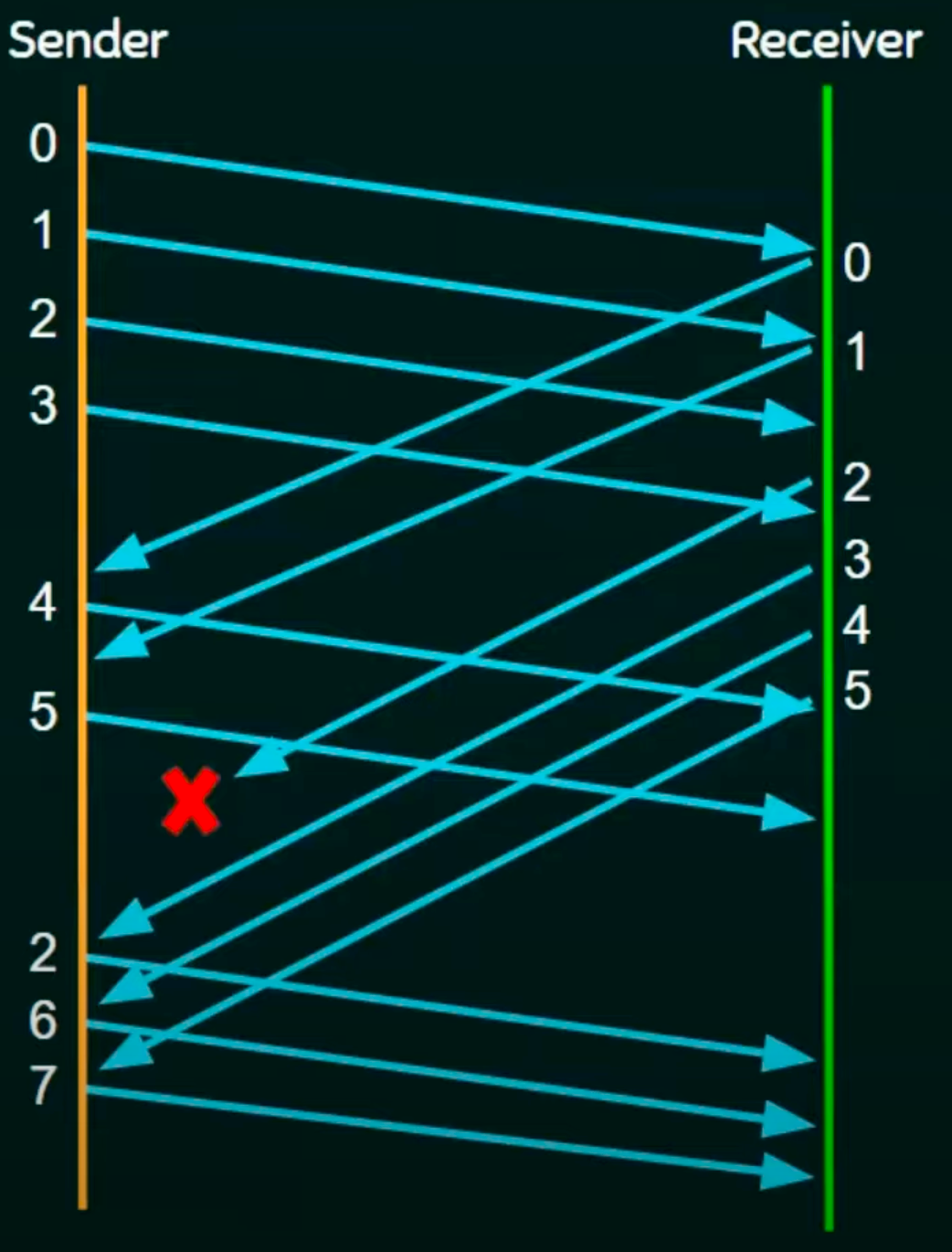
        Go-Back-N ARQ uses the concept of protocol pipelining(流水线) i.e. the sender can send multiple frames before receiving the acknowledgment for the first frame.
        There are finite number of frames and the frames are numbered in a sequential manner(顺序方式).
        The number of frames that can be sent depends on the window size of the sender.
        If the acknowledgement of a frame is not received within an agreed upon time period, all frames in the current window are retransmitted.

    N - Sender's Window Size.
    For example, if the sending window size is , then the sequence numbers will be 0,1,2,3,0,1,2,3,0,1,2,3,0,1...
    The number of bits in the sequence number is 2 to generate the binary sequence 00,01,10,11.
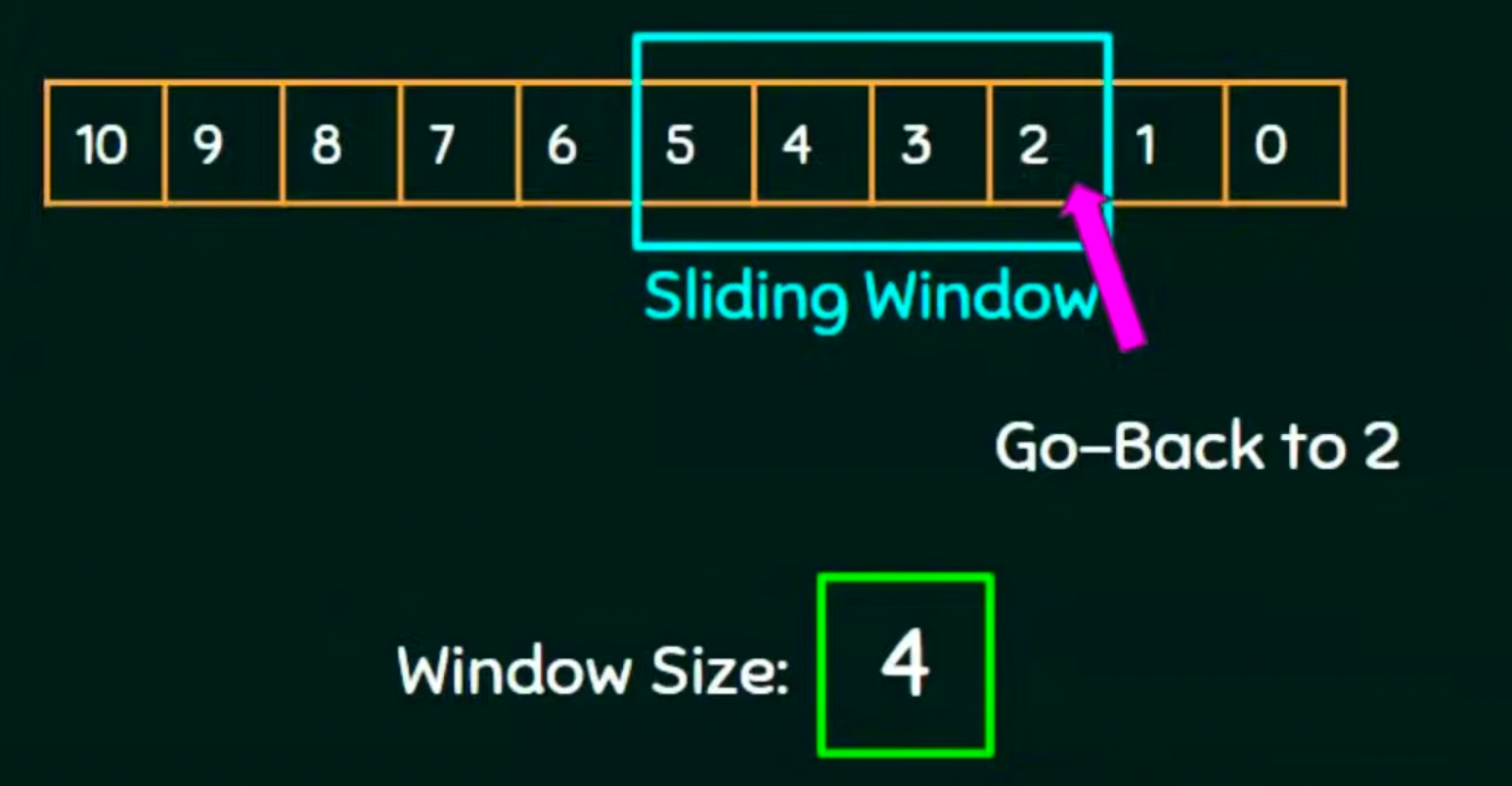
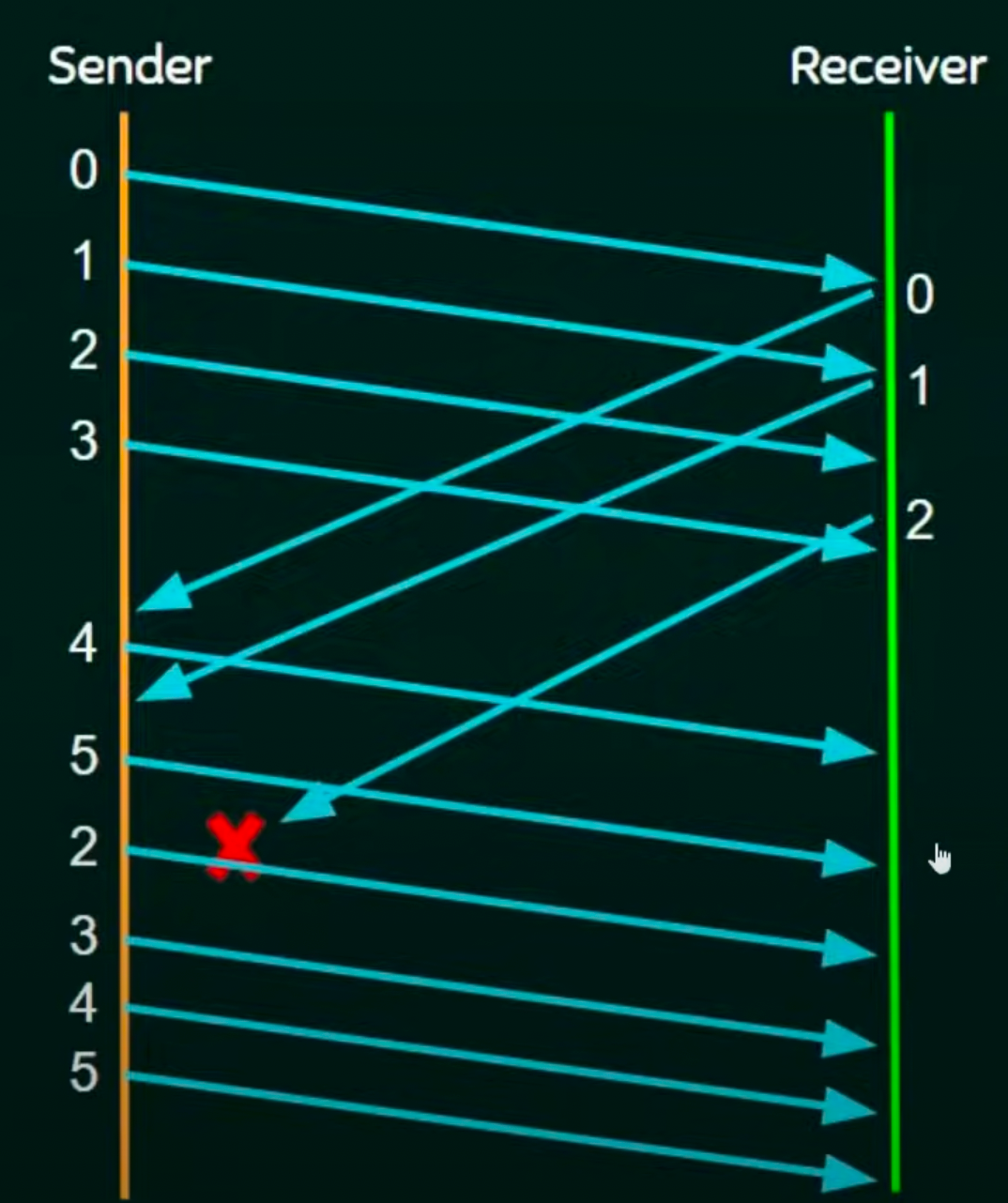
  2. Selective Repeat ARQ    

In Selective Repeat ARQ, only the erroneous or lost frames are retransmitted, while correct frames are receiver and buffered.
The receiver while keeping track of sequence numbers, buffers the frames in memory and sends NACK for only frame which is missing or damaged.
The sender will send/retransmit packet for which NACK is received.